About

Bud Weidenthal was a reporter, columnist and assistant City Editor for The Cleveland Press from 1950 to 1981.
He served as Vice President of Cuyahoga Community College until 1989, and editor of the Urban Report from 1990 until 2005.
Bud passed away in 2022.

7.25.2018

My Life As a Muckracker As told to Dr. Freud (part six)


I want to talk about life in the 60’s, Doc. 
It was a very tough time for the country. It was a kind of hell for many Americans, and yet life went on. For me it was a mixed bag. There must be a part of our brain that helps survive times like this.
The good doctor nodded but said nothing.
The very real threat of a nuclear war over Cuba with Russia. (Or “Cuber” as President Kennedy pronounced it.) We came very close. And a few months later he was dead. Some say because of how he dealt with Cuba. Several years later his brother Robert, a candidate for president hoping to continue his brother’s legacy, was murdered in a California hotel. Killed allegedly because of his support of Israel.
The racial uprising in the South, the March on Washington, the assassination in Nashville of Martin Luther King after his great speech in Washington. The riots in the core many of our cities, including Cleveland, that many of us really didn’t really understand. Why would anybody want to burn down their own neighborhoods, Doc? Never quite figured that out.
All punctuated, as the decade closed, with the National Guard killing four protestors on the Kent State campus, marking the end of the riots that flared on campuses across the country.
We lived it, Doc. We lived history, each in our own way. A love affair in New York City, and then three years later, the arrival of our wonderful daughter. For me the 60’s was the best of times, and the worst of times. Yes I was a still a newlywed at the turn of the decade. 


You don’t mind, Doctor, if a go back a couple of years to 1957?
You might find it interesting.
Grace and I were married in a small hotel on Park Ave. We had a wonderful quartet for dancing. Grace’s parents did all the right things, although it must have cost them an arm and a leg. Her mom was a school teacher, her dad, a pharmacist. It was important to them to impress my friends and relatives, and I believe they succeeded, although they may have spent their life savings on the betrothal of their only daughter.
We spent our first night at the Plaza Hotel, a big deal for a working news guy from Cleveland. Didn’t know quite what to expect, particularly when a bellboy burst into our den of love at one in the morning, without knocking. He was carrying a bottle of champagne and a bouquet of flowers. As you might imagine, the room was in disarray, and we were in the process of getting to know one other a little better.
You of all people should understand how “it” was in those days, in the 1950’s, most people waiting until they got married before they did ‘it,"  right, Doc? 
As I recall, we may still have been in the process of figuring “it” all out when the bellboy burst in. May have been a foreshadowing of things to come…that can affect a marriage, right Doc? It was a really a big deal in those first days right?
Of course that it all changed. Now “it” has a different meaning to the kids. They don’t wait get married to do “it”.
In the morning we boarded a flight from LaGuardia to Ft. Lauderdale for our honeymoon, which I had planned, but not as carefully as I should have.
The winter before, I had stayed at little one story motel right on the ocean beach between Fort Lauderdale and Hollywood, in place called Dania. It was recommended to me by one of my colleagues at the Press. Granted, it was no Hilton, not even a Holiday Inn, but it was less expensive and owned by a lovely Greek family. They had offered to let me use their car for most of the two weeks of our stay. They called it something like Knishes by the Sea. Not the kind of knishes we of the Hebrew persuasion understand, but a Greek word that I didn’t understand. 
We drove there from the airport, and the moment Grace laid eyes on the place I could tell she would trade one night a Hilton, for two weeks at Knishes by the Sea.
What did I know about the tastes of New York girls? As I recall she swallowed hard as we got out the car with our luggage and checked in.  
“Welcome to Kinishish by the Sea,” our hostess said, as she took us to our room.
Two single beds! We were stunned. She quickly pushed the beds together and put a spread over them making look like a double.
”I will give some money back,” said our Greek hostess.
“Mrs. Kinish, don’t you know that we are on our honeymoon? “
“I’ll see what I can do tomorrow.”  
It got worse. A storm had been brewing out in the Atlantic, off Dania beach, as we were getting ready for bed. It was windy. Brilliant lightning lit up the room.
 “Don’t worry Grace, it will pass,” I muttered, as I saw water seeping in under the front door. She had already curled up in bed with the blanket over her head.
I cleared my throat and watched the weather report on the TV. The forecast looked ominous. By the end of the night, nine inches of rain had fallen in Dania, and I had seriously considered evacuating the place.
Needless to say, it was a setback in the adventure into holy matrimony for the Weidenthals, but as promised, Mrs. Kineshes showed up bright and early the next day with a smile on her face.
“I found a bigger room for you. It has a real double bed and a couch to sit on."
The rest of Florida adventure into matrimony went relatively well. Do you think, Doc that our dicey encounters would be meaningful to our future relationship, Doc? Done any research?
By the way, in preparation for this document, I did a Google search trying to find my favorite love palace. There was no Kinishes by the Sea. 
Not in Dania, Ft Lauderdale, not in Hollywood, not anywhere.
Good riddance.
See ya next week Doc. There’s a lot to discuss.               


7.21.2018

My Life As a Muckracker As told to Dr. Freud (part five b)


I’m back Doc. 
Hope you enjoyed your time at the Cape. We used to go to Wellfleet every year. Magnificent. Seemed like every shrink in the country was there.        
What a great beach, but I shouldn’t dwell too much on the past, right Doc?
Left my Mastercard with your wife when I came in, so it’s okay to start.

You may recall we were talking about my five week-long trip in Europe in the 50’s, in search of insight into their highly touted socialized medicine and senior care. The big trauma for me, was when my girlfriend Bette ditched me in Copenhagen. Think I handled that pretty well considering how much I hated rejection. (Since my dad left me when I was five, right? Everybody wants to be wanted, but some more than others.)   
Remember that attractive lady (turned out to be a Yugo agent) who commandeered my cab to take me to a better place? It seems she was a PR person working for the Tito government, whose job was to welcome important guests. My welcome turned out to be fairly warm and fuzzy, but I was suspicious.

She checked me into a so-called luxury hotel, owned by the government. 
“I want you to enjoy your time here.”
She smiled at me. I smiled back.

“We are going to the ballet tonight, and the symphony tomorrow. See you later.”

“Thank you," I muttered.

“But what about my conference?”

“I will provide you with transportation,” she promised.

Well, all’s well that ends well. When the meetings ended, my first thought was to get a flight back to civilization ASAP. I took a cab to the airport, with tickets in my fist for JAT Airlines, Jugoslovenski Aerotransport. There must have been 200 people waiting for the same DC3- flight over the Alps to Zurich. Somehow I pushed my way to the window, shoved my ticket and $100 in American cash into the agent’s face. 

“Yes sir!” he exclaimed.

“Go right aboard.”
I was told that only a limited number of passengers were allowed, so that the old DC-3 could make it over the mountains. I swallowed hard, settled into my precious seat, and experienced one of the most both breathtaking airplane rides ever. We literally flew through the Alps. Awesome. Somehow we made it to Zurich where I spent a couple of days cleaning up, catching my breath, and unwinding. Then it was on to Amsterdam.

My European adventure was coming to an end in Schaveningen, a Dutch resort town on the Atlantic. A world conference there for child care givers.
The Cleveland welfare warriors were acclaimed again in the Netherlands, as trendsetters in their profession.

My flight back from Amsterdam to New York, Idlewild (now JFK) was booked on the Dutch airline, KLM. They flew Lockheed Constellations. New turbo props with a frighteningly checkered safety record. KLM had lost two planes over the ocean in recent months. Remember Doc, this was to be my first trans-Atlantic flight.
I was so troubled that I changed my flight to a day earlier to be on the same plane as the Clevelanders. At worst, we would all go down together and make headlines in the Cleveland papers.  At best, I would have some friends to talk and drink with on the flight. Would you call that obsessive compulsive, or just a panic attack? There were no pills for that in those days, so I just sucked it up.

And all went relatively well. Back in the states I found myself suddenly an overnight expert on socialized medicine and welfare care for the needy, and was put on the lecture circuit by the Press. The ladies’ clubs loved it, but it convinced me that I was not, definitely not, cut out for this diversion in my professional career.
That over, I moved on to become assistant city editor. I was one of the youngest ever at the Press or any major newspaper. The hooker was that I was assigned to the early shift, coming in daily at five in the morning to prepare for the 8 a.m. editors conference and the 9 a.m. early deadline for the first City Edition. It was challenging for a kid like me. I was alone in the office, except for one copy boy and the overnight cleaning lady, and I had to plan assignments for the entire staff as they came in.
I had to speed read the Plain Dealer cover to cover, scan the overnight  memos and stories, and check the morning news on the radio. At six, Louis Seltzer, the renowned editor, was on the phone.
 “Weidenthal, what you got for today?” he would say, predictably.

“See that story inside the PD on page six about that old lady who’s being evicted from her house on the west side?  We could pick up on and maybe use it. Remember to get a picture.” 

At that hour my body was awake but my mind was still in bed.

”Louis we have some great stuff,” was my usual retort, with fingers on both hands crossed.

 “See you later.”

In order to accommodate my new assignment I had moved to the bachelors’ quarters at the Lake Shore Country Club in Bratenahl, right on the lake and backing up to the freeway. It was a convenient seven minute drive to downtown offices. Alarm set for 4:15, I'd take a quick shower, jump in the car and be at the office at Ninth and Rockwell in no time. The night copy boy always had my regular breakfast ready for me; a sweet roll and a glass of buttermilk.

I knew I was on my way up when the Press asked me to attend the highly esteemed American Press Institute for city editors at Columbia University in New York. I shared my wisdom there with the likes of Alan Newhart, city editor of the Miami Herald, who would later found the enormously successful USA Today. The city editors of the New York Times and the Chicago Sun Times were there, among others. This was big stuff. I tried to appear all-knowing and furiously took notes to present to my editors when I returned to CLE town two weeks later.
But there was more to the trip. Big time, Doc. Much more.

One of my favorite cousins, a New Yorker, fixed me up with a friend whom she had known at NYU. This friend was of all things, a journalist, working at Time magazine. My cousin let slip to her that I was a journalist on the way up…sure to be an editor.
On our first date we went to Nick’s, a jazz club in Greenwich Village. We agreed that we both loved the cornet of Muggsy Spanier and the sounds of his quartet. A good start.
Was it love on the first date? Who knew? It was on the second date, when things really got interesting. I wrote about it in the Press, in a column about the return of Frank Sinatra to the big time. The show was hailed by the network as “Ole Blue Eyes” is back.”  Frank, of course was for my generation, the Beatles, Elvis, and hip hop all wrapped into one. 
I have a copy of my Press article, framed and hanging in my apartment, along with a personal letter I received from Ole Blue Eyes himself. You know the name, don’t you Doc.? I’m reading, Doc. Right from the article.

 “There was this cute little gal from Time Magazine. We had met on a blind date. On the second date I had come to her parents west side apartment. With the old folks off to a movie or something convenient, my young friend connected her record player. She had brought out her records. They were mostly Sinatra.

Soon we danced and Frank sang. I remember the words: ‘It was winter in Manhattan, gentle snowflakes filled the air. The streets were covered with a film of ice.’

It was a deeper Sinatra voice, augmented by better fidelity. I suspect we fell in love as we danced that night. Grace and I were married in Manhattan several months later. Her dowry: a bundle of Sinatra albums, and that old record player. We still have them. From time to time we haul out the albums and get sentimental over some of greatest music ever produced on records. They have a special meaning for us that the years don’t erase. The critics can say what they want about Ole Blue Eyes coming back. In our little house in Cleveland Heights he never went away.”    


Enough of this sentimental stuff, Doc. Let’s get back to reality. 
What were you saying about obsessive-compulsive thinking, Doc?
Wake up Sir, the hour is over. Your wife is waving at me again.

7.19.2018

My Life As a Muckracker As told to Dr. Freud (part five)


Here's something strange Doctor: To this day I've not been able to figure out how Yugoslavia’s Communist dictator, Marshall Tito, knew I was coming to Zagreb.

Did Russian spies tip him off, or was it that Jewish Rumanian girl with the unshaven legs I met in Zurich? She was nice, and I thought it was a pleasant encounter. She didn't strike me as a commie agent. More on that in a moment.

I was still in distress, when I headed to Zurich on my journalistic adventure into government sponsored social and welfare services, but I managed to put Bette Daneman far back in my mind.

Zurich is, as you know, a magnificent, civilized town. At least it was in those days. The first night in town, I decided it was a good place to relax and stretch, take a shower and wash some clothes.
Image result for zurich 1955
I wasn't in the room two hours, when I got an urgent call from the front desk.
“The police want to talk to you Mr. Veidenthal. Yes? They say you have clothing hanging on the railing of your balcony. It is against the law, sir! You have a half an hour to remove them, or we will have to evict you.
“Yes sir!”  I said, and promptly obeyed.
Is this Nazi Germany?, I thought. I went out to the balcony, which overlooked the town square, and removed every bit of clothing from the railing, feeling like someone was tracking me from below.

My visit to an enormous Swiss hospital the next day was very impressive. I could not help noticing that the Red Cross was hanging all over. Then I reminded myself that is the Swiss flag. It hangs everywhere. The government hospital was very much what you might expect in a small, homogenous country. The care was superb, and the facility had sustained no damage from the war. They had remained neutral, as the Nazis ravaged Europe.
That night, my encounter with the Rumanian girl came on a trolley as I was riding back from the hospital. I noticed her sitting opposite me, attractive and young, with unshaven legs. Somehow I remember that vividly, after all these years. So Eastern European, I thought. I smiled and she smiled back. I got up and walked toward her, she made room for me, and we talked. I noticed a small Star of David hanging around her neck. Aha, she's one of us, I declared to myself. 

I said “Shalom”. 
She replied, “Shalom”. 

Turned out she was a Holocaust survivor whose family had escaped Rumania during the war. l wanted to know more. It was the germ of a very interesting conversation. When we got to the stop at her hotel she invited me to get off and have a cup of tea. Nothing sinister I assure you, but I did mention my planned visit to Zagreb. Innocent, totally innocent, at the time.

I left Zurich none the worse for wear and headed for Vienna, which was still occupied by troops from the US, England, France and Russia. The Victors, so to speak. Somehow, using my Press credentials, I managed to gain entry to the world meeting of the International Association of Legislators. Lawmakers from everywhere attended, including a senator and several congressmen from Ohio, and notably, Senator Estes Kefauver of Tennessee, who I believe had run for president. (Unsuccessfully.)
I jumped on a bus with the lawmakers and their wives for a fun evening at a tavern up in the Vienna Woods. Kefauver as I recall, was really drunk before we got there, and led our bus mates in singing a round of Auld Lang Syne. I thought to myself, if these guys were sober we could declare peace around the world. I was idealistic in those days.
It was a frenzied drunken evening, where absolutely nothing would be solved.

So much for world peace.

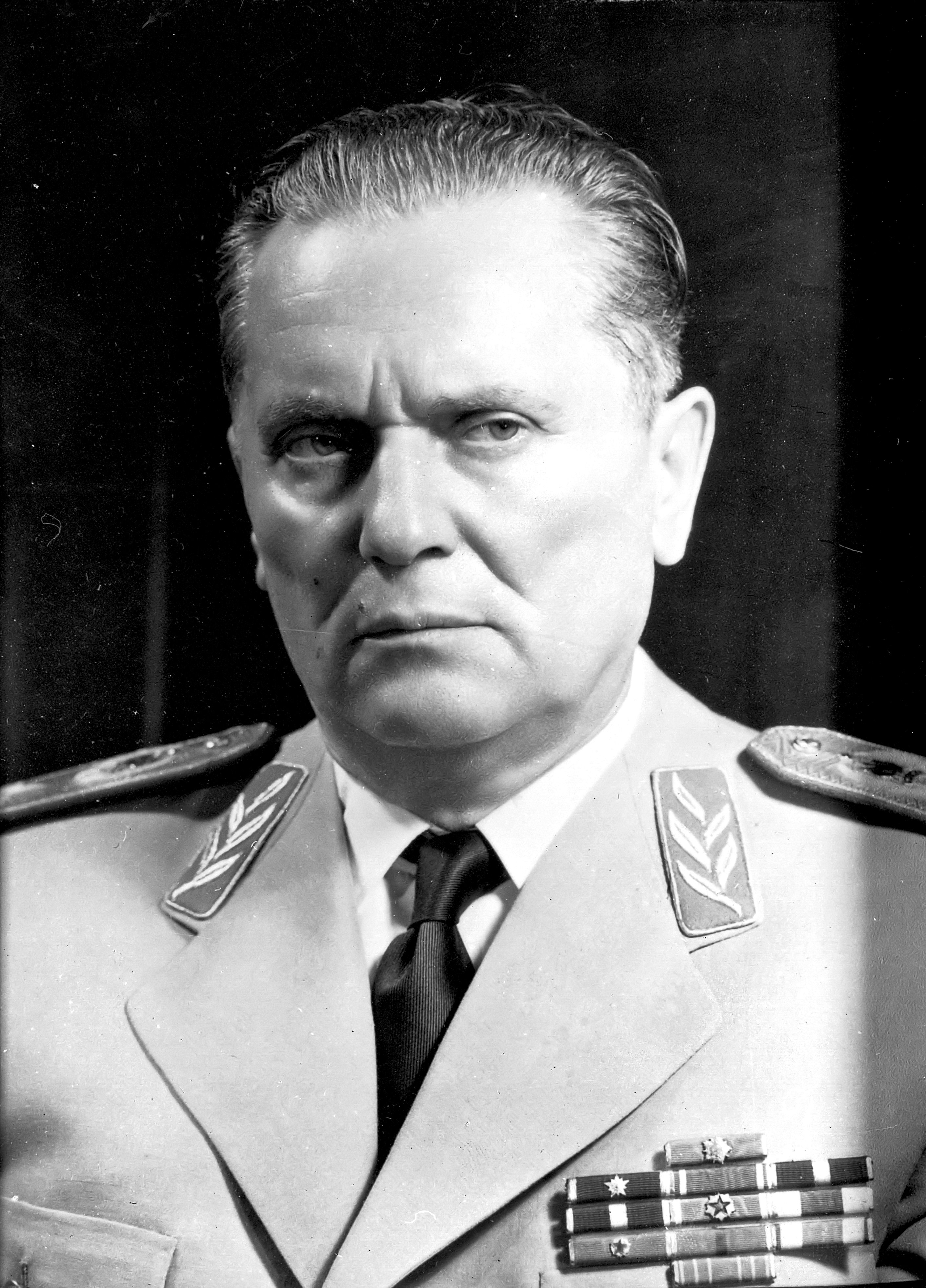
From Vienna, a battered prewar plane managed somehow to get me to a small airfield in Zagreb. It was another tiny airport with mostly government military warplanes. This was the heart of the new communist Balkans where Dictator Marshal Tito had assumed control. He ruled with an iron hand, and was not loved by the free world, as he was a puppet of Stalin.
Josip Broz Tito uniform portrait.jpg
I had come to cover the World Conference for the Welfare of Children. Key participants were, the Dean of the School of Social Work at Case Western Reserve University, and Bell Greve, Director of Health & Welfare for the City of Cleveland. This was to be the first post war conference. Both Bell Greve and the CWRU dean were widely known, Arriving at the airport, I looked around. The horse drawn vehicles, ready to carry us into town, struck me as so primitive.
THE TOSO DABAC ARCHIVES

This was 1955. There were only a few motorized cabs. I was told there was only one gas station in town. I somehow found a “real cab” and headed for my hotel which had been booked for me by an agent back in Cleveland. We pulled up, and before I could gather my things and pay the driver, an attractive woman opened the back door.

"On behalf of Marshal Tito, I welcome you to Zagreb. I have a better place for you," she announced in perfect English, then she hopped into the front seat and instructed the driver in Slovenian. I shouted to the driver to let me out, but it was too late.
I was petrified.

Next: My indoctrination into Communism, Tito and Stalin-style.

7.10.2018

My Life As a Muckracker As told to Dr. Freud (part four)


My near disaster with Bette and the Queen Mary gangplank cast an ominous cloud over what was to be my triumphal and perhaps romantic return to Europe. 
Doc, I was just a young buck being a young buck. I was acting almost normal, right?
Not a word from the master. But I detected a slight smile curl up from his lips. Absolution, I thought...

In spite of the chaos, (I called it a misunderstanding) Bette decided to stay in London with me at the Sloan Square Hotel she had booked for us, while I visited the social service agencies, hospital and senior centers. I was treated royally by my hosts wherever I went, giving me a badly needed psychological boost.
The one major hang-up was the Morris Minor mini car I rented from an agency on Piccadilly Circus. It was tiny, like a toy. The driver's seat was on the wrong side and I had to shift with my left hand.
Ever been on Piccadilly Circus, Doc? It's like a merry-go-round that never stops. It is almost impossible to get off of. Even with a normal car.
Well to make a long story short, I finally got off the Circus. I did my thing, while Bette went back to Oxford to finish up the term. I was in denial, Doc. I found the much heralded British health and welfare institutions neat and clean, full of mostly happy, blue eyed Anglo Saxons who all seemed like they belonged to the same Rotary Club.

This is not Cleveland, I told to myself.
I found it pretty much the same in the Scandinavian countries later on, by the way.

On the fourth day I finished my royal British adventure and headed up to Oxford, reminding myself to drive on the left side. I promptly got lost. Finally arrived at four. I had promised to pick Bette up at one, and found her waiting with her bags in front of her dorm, not happy. The following days were difficult, but we moved on. We took the ferry from Dover across the channel to Esbjerg, the port for Copenhagen. That rainy day in Denmark added a touch of gloom to our fading relationship. Very early on the morning of the third day.... well, it happened, Doc, it happened. Very early, like at five, I heard her wandering around the room, packing her bag, and heading for the door. For some reason I didn't say a word.
Honest...she left note: “I will be at the railroad station in Bonn, Thursday afternoon.”
I didn't quite know what to make of it. Remember, I was in state of denial.

I spent the next two days on my scheduled visits to some very impressive senior centers. One evening I was hosted by a club of old folks in a government run center. Again, blue eyed happy folks in the land of Danny Kaye's "Wonderful Wonderful Copenhagen." Again, not Cleveland. Not even Columbus, I thought to myself. I made a mental note.

Then it was time to sail off for the Deutschland on a ferry from Esbjerg to the port of Hamburg, from where I had sailed home ten years prior with my division. That town took a terrific beating during the war. At my hotel I had to explain to them that I was flying solo. It was okay. So was the famous the St. Pauli neighborhood that I toured in the evening. It was good day, in spite of everything.

Thursday morning I took the midday train south along the Rhine, a beautiful trip to Bonn and destiny.

I spotted Bette in the crowd with a gentleman. My heart sank.
“This is Professor Dinbgbat from the university here. We're old friends. We’ve decided to spend a couple of weeks together. See you back in Cleveland?”

I was speechless. I said goodbye, sort of. I never saw Bette Daneman again.
Assmannshausen on the Rhine

I grabbed the next Rhine mail barge down the river through the most beautiful river valley in Europe, and jumped off at 
Assmannshausen, because I liked the name. I found a room in a small hotel with an attached (typically German) tavern then I cried my eyes out, sipping perhaps the most delicious finely crafted beer in the world.
That's what men do, right Doc? Right? Have a brew and move on beyond the despair of the moment.

I reminded myself that as a reporter, there was work to do.
Zurich, Vienna and Tito's Zagreb lay ahead.

My Life As a Muckracker As told to Dr. Freud (part three)


Doc, welcome back. Hope you had a nice Vacation in Miami Beach. You look good. Healthy. Better than Vienna right?! Had a little bout with something. Last week but I'm fine now...

To bring you up to date: I spent about two years chasing cops on the police beat. Auto accidents, fires, and the like, before my time came to move ahead. On the beat I learned a lot about the human condition in Cleveland; the plight of blacks and whites struggling to maintain a decent lives. It wasn't easy in the city, even in those relatively benign days of the 50's. Of course, the raucous 60's were just around the corner. We should have seen that coming, but we didn't. It wasn't a soft touch for the cops either. The police beat experience made me wonder what happens to a good, decent human being when he or she puts on a uniform.
Doc, you probably understand this better than I. Human nature, right? The uniformed guys lose their humanness. Can't change that, Doc. The uniform brings out the feeling of power. Every time I encountered a cop in later years, I tried to deal with them like human beings. It simply didn't and doesn't work. The law is the law. I invariably ended up saying yes "Sir, yes Sir," and they mostly ended up telling me to tell it to a judge.

One night when I first went down to Texas, I was driving in a relatively dark busy road on the way to a religious service in Sun City about ten miles away. After I had made a turn onto a main road, there was the sight of flashing lights the sound of a siren.

“What have I done?,” I thought to myself.
The cop pulled me over, and walked toward the car. Oh good, it was a woman! A young blonde. Not bad looking. I breathed a sigh of relief. I can handle this. But I had sighed too soon. From those beautiful lips she barked,  
“You got a license? You a citizen?! What are you doing down here? Do you know where you are going?”
“I’m going to a religious service at Sun city, and I'm a bit lost Ma’am. Maybe you can help me? By the way I really like your town, the library, the theater...”

“Any drugs in the car? Do you know you were doing 25 in a 40 mile zone?! That's a violation of state law. And you made a wide turn into Williams Drive,” she barked as she poked her flashlight into my face.
“I’ll let it go this time, with a warning. Better not happen again.”

So much for good looking blondes in uniform.

My opportunity to move up from the police beat arrived when Alex Groner, a fine reporter and writer, accepted a job with Time magazine. He had covered the Health and Welfare beat for the Press. Louis Seltzer asked me take over the assignment, a prime job. He was strongly involved in the health and well being of the town's citizens, particularly for the powerless and the disadvantaged. I was told that Health and Welfare was important. The editors weren't socialists, but good journalists. We became the champions of the weak and the powerless, and we were interested in the rapid growth of health care in the city. 
Dr. Crile
Dr. George Crile led the way. He came to the east side where he founded the Cleveland Clinic, initially known as the Crile Clinic. The Press was on top of the story. The paper was also concerned for the care of the elderly and the poor. They were convinced we could do better, and our readers wanted it that way. It was a huge public issue in those days, too.
After I established myself on the beat, the editors agreed to send me on an ambitious five week trip to Europe to take a look at the advanced social systems that were emerging in the West. If they could meet the social needs of their folks why can't we? The question of course, is unanswered to this day. For me it became, with the boss’s permission, much more than a simple journalistic venture.

It was my sentimental return to Europe, only a few years after the war. This time I took the Queen Mary, the stately ocean liner of its time. I had my own bunk, but not much more. I holed up in the lowest class. It must have been fifth class. Four of us shared a so-called room. There was me, another fellow my age from Chicago, who I hung out with, a priest, and a middle aged guy. A group of us from steerage hung together, found a secret passage to First Class and had a ball. There were a number of young single guys and some very lovely British young ladies.
But there was a hooker to this, Doc. These girls were all Brits who had married American soldiers during the war, and were now returning home to visit their families. I, of course, was very careful, not wanting to create an international incident, but not careful enough. To this day I blame it on the guy from Chicago. (And of course the priest, who should have prayed for me.)

I was controlling myself as best I could, because my Cleveland girlfriend, Bette Daneman, was to meet me in London. I forgot to tell you about her, Doc. Bette was a very bright young lady, and head of the Cleveland Junior council on World Affairs, who was studying in Oxford for the summer. We’d planned to travel together on a five week adventure. Innocents abroad, so to speak. I would stay in a hotel on Sloane Square, do my reporting in the London area and then drive up to Oxford and pick her up.

Well, it didn't quite work out that way. Doc. You know, raging hormones.

By pure coincidence Doc, honest, I happened to be innocently walking hand in hand down the gangplank with one of the British gals, and would you believe, standing there among the greeting crowd to surprise me was Bette, with a pained look on her face. Boy, was I surprised. She saw me “walking the plank,” so to speak. I ducked away from the British girl, but it was too late.

Bette never really smiled that day or the next. You understand, don't you Doc? Girls are funny. They're sensitive. It seemed like a wonderful friendship begun in Cleveland, but it was destined for disaster in London.

Can you help me with this one? Can you, Doctor?


Next: Crying in my beer in Asmunhausen, and a dicey encounter with Yugoslavia's Dictator, Tito.

7.09.2018

My Life As a Muckraker (part two) As Told To Dr. Freud (Sending a boy to do a man's job.)


I'm sorry I missed my session last week, Doctor, but I had a bad cold and I didn't want to give it to you. Your wife said it was your policy that I had to pay for missed sessions. I gave her my card. (He nodded at me looking not at all embarrassed. I was annoyed, but I didn't say anything.)

Just to sum up from last time Doc, you recall that I was hired by the Press right out of college, spent a few days in Toledo, then hopped the Mercury Streamliner to begin my career as a journalist.
You might expect that at my moment of triumph, I would have jumped off the train at the terminal, grabbed a bus, and headed to Ninth St. and the Press to report for work. Instead took a deep breath, and took the Cedar Hill trolley up to the Heights for home. I had to find a white shirt, a narrow tie, and get a haircut and shave.
The Cedar Hill trolley

Maurice Weidenthal, my grandfather


A few days later, with dreams of becoming some kind of hot shot editor, I walked into Norman Shaw's office and presented myself for the coronation, so to speak. After all, he did call my home asking about me, right Doc?!

Shaw was a fine looking, cool type with graying hair and a straight serious face. He was an Oberlin man, the son of a Plain Dealer editor. He was much the antithesis of Press editor Louis B.Seltzer, who left school after junior high to find his way in journalism. Kind of a balance at the top, which as it turned out, worked very well.

It wasn't long into our conversation when Shaw noted that his father, Archer Shaw, and my grandfather, Maurice, had worked together at the Plain Dealer at the turn of the century. He as associate editor, my grandad as politics writer and theater critic. I said to myself, it’s my name he wants, not me or my great talents. My ego sank. I was hurt inside. Yes, Doc, it hurt.

It sank even deeper when I was told that there weren't any real reporter or editing jobs open at the moment; that I would have to start as a copy boy. Oh my God, I thought to myself, how much can my fragile manhood take?
Enough of this “boy” stuff!

But I sucked it up, Doctor, and took the job, still at $35 a week. I forgot to tell you that part of the job was to clean and fill paste pots. Each writer had a coffee cup filled with paste, necessary to clip and paste copy after proof reading or edits. It was a messy job, especially when you consider how easy it is to cut and paste on the computer these days.

My plan was to do a first class job, even with the paste pots. (Which I became very good at, by the way.) I’d get to know the territory and become friendly with some of the big guys that I admired. One of them was Dick Peters, a genuine Yalie, who looked the part. Like Shaw, he was tall, with silvering, thinning, graying hair, in his early 40's and straight as an arrow. I learned that he’d been General Douglas MacArthur’s PR guy during the war in the Pacific. I fantasized that he was there when MacArthur made his famous return to the Philippines. Maybe he even wrote the line.

Peters lived on Princeton Rd. in Cleveland Heights with his father, who was the headmaster at University School. For some reason, Peters and I hit it off. After a few months of "boy" work, Peters approached me one day saying,
"We’re going to try an experiment in our department. We need young blood and we want you to join us.”
 I was stunned. Flattered.
“You start on Monday.”

I didn't quite know how to act. I had to buy more shirts and ties for my transition from filling paste pots, to being an editorial writer. It was a real coup. There were four men in the department. I would become the fifth. My job was to deal with letters to the editor, pick out the best, and confirm their authenticity.
I would also help in the back room laying out the page, proofreading, and making the morning deadline. It was cool. And I tried to act normal among my comrades who worked in the chaotic City Room.


After awhile I was given the latitude to crank out editorials on fairly non controversial subjects. One of my first ventures into the world of editorial writing, was a full page editorial I wrote for the Saturday page, calling for a rebuilding of the Cleveland Airport, which was, at that time, nothing more than a backwater pre war facility with no concourses or jet ways. We ran three rather large aerial photos of the three area regional airports; Cleveland, Pittsburgh, Detroit. The other two were already in the construction stage. As usual, Cleveland was slow to catch up. We were entering a new era of jet travel, and Cleveland was falling behind, being dragged down by the small mindedness at City Hall, while Detroit and Pittsburgh were taking a regional approach.
Cleveland Hopkins Airport 1956
We did get some action, when the city announced it was tacking on two concourses to the existing building, but the basic small mindedness continues to this very day.

I learned a lot about the inside of the big city paper while working “up front”, as they called it. There was always this behind-the-scene tension between the local editors and the Scripps Howard owners. Scripps was conservative, and owned a chain of papers across the country. It also owned Cleveland's first television station, WEWS. (Remember Dorothy Fuldheim?)

Dorothy Fuldheim


The Press was populist liberal. Scripps didn't worry about the local stuff. It sold papers. But on major national matters, we were being watched.
Roy Cohn and Jospeh McCarthy
Those were the days of that evil man, Joe McCarthy. The editorial writers wanted to tee off on this man and the witch hunt. He was no Trump, but in those days, many felt he was a threat to the nation. He had destroyed the lives of many good people in his so-called Communist Crusade. His side kick was nasty New York lawyer, Roy Cohn, who in later years turned up advising Trump. 

Finally, aggressive lawyer Jack Welch, from Massachusetts stood up, as he defended members of the Armed services. 

He looked McCarthy in the eyes and declared,
“You have done enough. Have you no sense of decency?"
McCarthy eventually faded into obscurity, done in by growing opposition, good journalism, his own nastiness and alcoholism.


A lesson from history. 
The truth does matter.

Next: (My Life as a Cop Watcher )


LinkWithin

Related Posts Plugin for WordPress, Blogger...